Merovingian
Member
- Joined
- Sep 17, 2006
- Messages
- 206
- Reaction score
- 8
For a while I have been hearing good things about the Megaloop FX. I currently have a Wellbrook loop which I assume, as been doing good so far, I'm not sure since I have nothing else to compare it to and I have no other experience with other types of long wire, random wire, ect. . . antennas. I have been receiving signals with it for the last year, that is all I can say at the moment. I have seen some YouTube videos of people receiving DMR broadcasts as well as others with their SDR radios and their signals seem to be very "clean" and reception strong. Those people are often in Europe so they may be closer to the transmitter than I am here in the US but they are often using a random wire or long wire antenna of some sort to receive their signals. I have a little room for a long wire antenna, maybe 100 feet or so but it would not be very convenient to install nor easy to put up, it could be done I suppose if I "really" needed/wanted to.
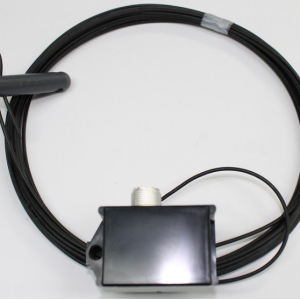
I have been thinking of sticking with magnetic loop antennas since they would be a lot easier and more convenient to put up where I am and with what I would have to do to install it. My Wellbrook loop came with a 1 meter aluminum "hoop" for the antenna element, I'm guessing that was chosen for shipping, cost and performance for a given space reasons, maybe the internal amplifier is optimized for that size as well, I don't know. . . I was wanting better signal reception performance so I was looking at the Megaloop FX since it gives the option of different sized flexable loops, I don't know what the size limit is for this antenna. The megaloop FX is a little expensive so I have a few questions for those that know or have had experience with many different antennas.
For reference as to what I like to do: I like to listen to everything in general, I don't have anything specific in mind I want to receive or monitor so I would be listening between 1kHz and 30MHz. One day I may want to listen to HAM guys talk, some other time I may want to receive a weather fax transmission, maybe I want to listen to a distant radio station, or try to decode a digital signal, ect. . . In the future I may also want to try to use my Wellbrook and a Megaloop FX, if I buy it, for diversity reception.
#1. The Megaloop FX has the option of a 5m and 10m loop. I also found a site that someone is selling a 20m option for the antenna. If I were to buy the antenna with the 5m cable would that be just as good or better, compared to my Wellbrook? Or would say the 10m or 20m provide a notably better signal reception because it is bigger?
#2. Is there a limit to the loop size? If I wanted to make my own 30m or 50m loop for some reason, would that work even better? Or beyond a certain size there is not much noticeable difference?
#3. How about shape? I've seen people make it a diamond shape. Does it just have to be some sort of roundish shape to work well? Or does it have to be a perfect circle? Or could I take a 20m loop and stretch it out to a flattened oval shape almost like a folded dipole and still have it work well?
#4. Does a long wire antenna just provide a better signal because it is a long piece of wire better tuned electrically to one or many frequencies? It dose seem hard to imagine that my tiny by comparison Wellbrook does as good as it does with it just being a 1m diameter loop versus the actual signal wavelength that may be hundreds of feet long or kilometers long.
Thanks for your time.
I have been thinking of sticking with magnetic loop antennas since they would be a lot easier and more convenient to put up where I am and with what I would have to do to install it. My Wellbrook loop came with a 1 meter aluminum "hoop" for the antenna element, I'm guessing that was chosen for shipping, cost and performance for a given space reasons, maybe the internal amplifier is optimized for that size as well, I don't know. . . I was wanting better signal reception performance so I was looking at the Megaloop FX since it gives the option of different sized flexable loops, I don't know what the size limit is for this antenna. The megaloop FX is a little expensive so I have a few questions for those that know or have had experience with many different antennas.
For reference as to what I like to do: I like to listen to everything in general, I don't have anything specific in mind I want to receive or monitor so I would be listening between 1kHz and 30MHz. One day I may want to listen to HAM guys talk, some other time I may want to receive a weather fax transmission, maybe I want to listen to a distant radio station, or try to decode a digital signal, ect. . . In the future I may also want to try to use my Wellbrook and a Megaloop FX, if I buy it, for diversity reception.
#1. The Megaloop FX has the option of a 5m and 10m loop. I also found a site that someone is selling a 20m option for the antenna. If I were to buy the antenna with the 5m cable would that be just as good or better, compared to my Wellbrook? Or would say the 10m or 20m provide a notably better signal reception because it is bigger?
#2. Is there a limit to the loop size? If I wanted to make my own 30m or 50m loop for some reason, would that work even better? Or beyond a certain size there is not much noticeable difference?
#3. How about shape? I've seen people make it a diamond shape. Does it just have to be some sort of roundish shape to work well? Or does it have to be a perfect circle? Or could I take a 20m loop and stretch it out to a flattened oval shape almost like a folded dipole and still have it work well?
#4. Does a long wire antenna just provide a better signal because it is a long piece of wire better tuned electrically to one or many frequencies? It dose seem hard to imagine that my tiny by comparison Wellbrook does as good as it does with it just being a 1m diameter loop versus the actual signal wavelength that may be hundreds of feet long or kilometers long.
Thanks for your time.