


Haven't seen this discussed here so thought I'd post.
I came across a post on Reddit months back about Pico Balloons and found it interesting. Not sure I would ever try it but it is an interesting twist to amateur radio Tx and monitoring. From what I can gather, various VHF/UHF, and HF frequencies are used and tracked using WSPR and other means.
From Pico Balloon Archive — every flight, free and open
-----------------------------------------------------------------
What these are
Amateur radio operators have been launching them for years, and receivers all over the world pick up their position reports and pass them on. The Pico Balloon Archive collects that record: every flight, where it went, how long it lasted, and what the air was doing around it.
One balloon launched in May 2022 stayed up for 820 days and covered 1.1 million kilometres — thirty-four laps of the Earth — on a tracker that weighs less than a slice of bread.
-----------------------------------------------------------------
This article explains the basic idea:

 spectrum.ieee.org
This web site let's you track various pico balloons aloft (click on the various balloons listed under "Airborne Now" - left column - to view info & telemetry):
 picoballoonarchive.org

I came across a post on Reddit months back about Pico Balloons and found it interesting. Not sure I would ever try it but it is an interesting twist to amateur radio Tx and monitoring. From what I can gather, various VHF/UHF, and HF frequencies are used and tracked using WSPR and other means.
From Pico Balloon Archive — every flight, free and open
-----------------------------------------------------------------
What these are
A balloon that floats for months
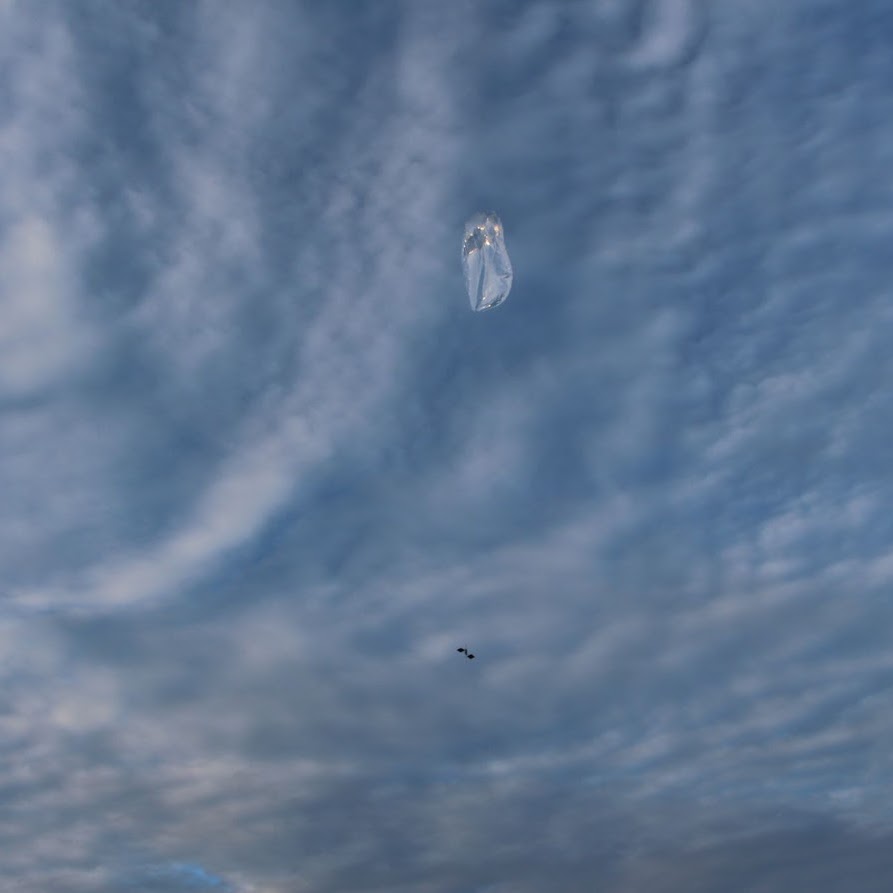
A pico balloon is about the size of a party balloon. Sealed, filled with a little hydrogen or helium and hung with a solar-powered radio tracker weighing a few grams, it rises until it floats — usually somewhere around 12 to 14 kilometres — and then simply stays there, carried by whatever the wind is doing. It has no engine, no ballast and no way to steer.Amateur radio operators have been launching them for years, and receivers all over the world pick up their position reports and pass them on. The Pico Balloon Archive collects that record: every flight, where it went, how long it lasted, and what the air was doing around it.
One balloon launched in May 2022 stayed up for 820 days and covered 1.1 million kilometres — thirty-four laps of the Earth — on a tracker that weighs less than a slice of bread.
-----------------------------------------------------------------
This article explains the basic idea:
Build Your Own Pico Balloon and Explore the Stratosphere
A $4 Raspberry Pi Pico can help you track a DIY balloon around the world.
spectrum.ieee.org
This web site let's you track various pico balloons aloft (click on the various balloons listed under "Airborne Now" - left column - to view info & telemetry):
Pico Balloon Archive
Every recorded flight of a super-pressure pico balloon — live tracking, seven-day forecasts, and the whole archive as one dataset.
picoballoonarchive.org
Last edited:


