Two suggestions to resolve your issues.
1) Use a stainless steel rod (as was suggested above). They aren't hard to find (your local Home Depot for example -->
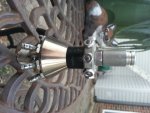
Stainless Steel - Metal Sheets & Rods - Hardware - The Home Depot), but you'll need to know the correct size (you may want to simply remove a complete one and bring it with you and ask the sales folks "I need a stainless steel rod to replace this". You could also bring the broken one but you'll need both parts, the rod and the part that screws into the antenna so they can match the screw size. If you can't get an "all thread" rod in the correct size, you can get a solid rod and a "tap and dye" to thread it yourself. I recommend that since you'll be working on the antenna anyway, you get enough rods to replace them all so you won't have to do the task again next time a butterfly lands on one of those cheaply made RS element rods. This is what my RS Discone looked like after an ice storm. Most elements (including the top whip and coil) were intact prior to the storm.
View attachment 68337
2) One or more of your TV stations may have changed frequency in preparation for the latest update to how digital TV signals are being transmitted in the US. Often this is done in stages so you may need to rescan fairly often to keep up with the various stations making the necessary changes. Also note that during this change more stations will move to VHF (channels 2 - 13), unlike the previous digital TV migration when most stations moved to UHF channels for their RF signal (they nearly all kept their old channel number for the display even though they no longer actually transmit on their old channel frequency (e.g. what the station that displays 5-1 since their analog signal was transmitted on channel 5 may have transmitted on UHF channel 32 after going digital).
This link from the FCC web site has some details -->
Broadcast TV Transition: What to Watch For