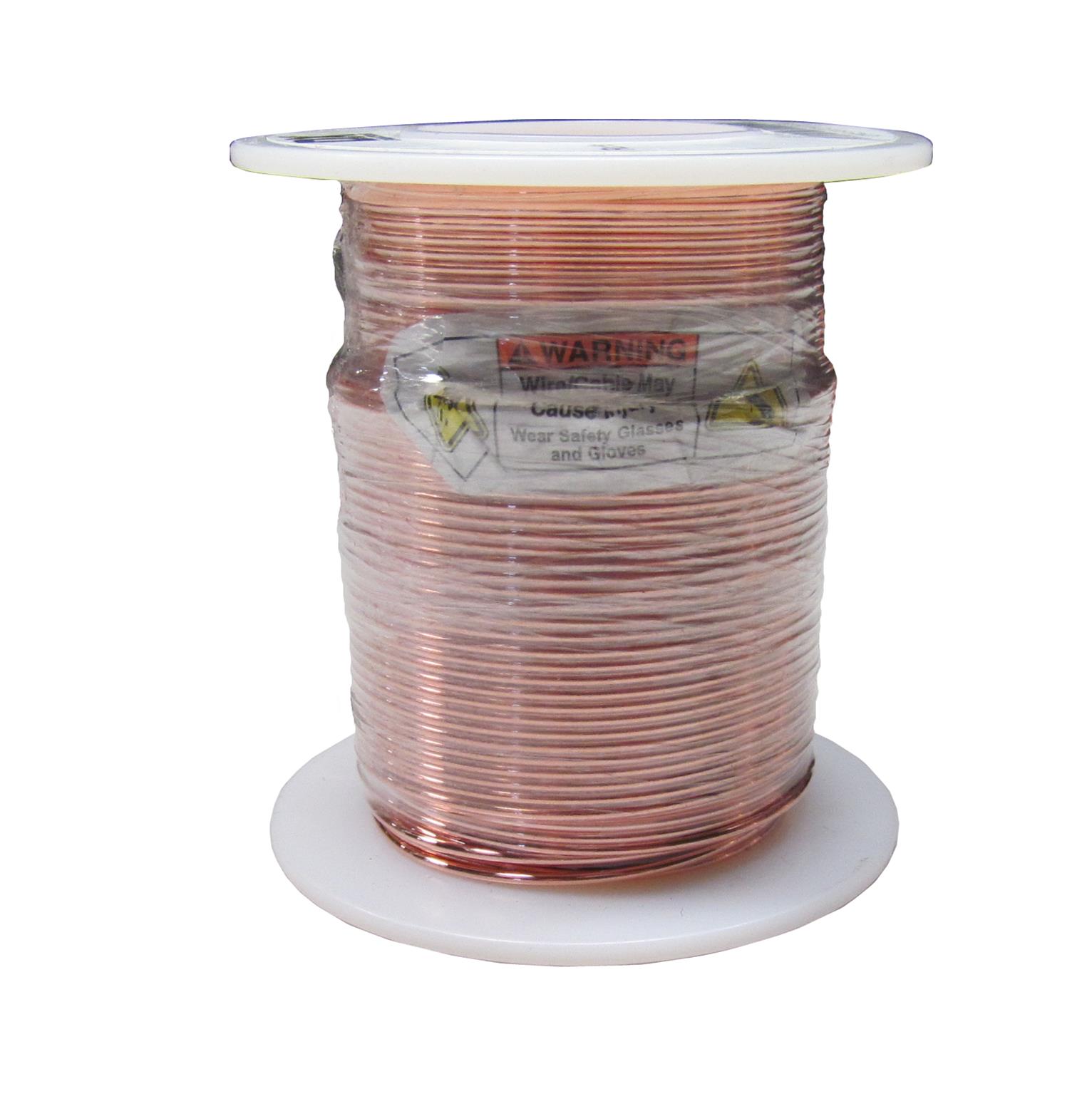
Adding wire to my wire

bearcatrp

Member
Joined
Apr 11, 2005
Messages
4,097
Reaction score
2,112
Location
Land of 10,000 taxes
Can I add wire to my current wire, just twisting them together or will this degrade performance? Really don’t want to redo the entire line if I don’t have to. But if this is a bad idea, will re do it. Thanks.
 

K4EET

Chaplain
Premium Subscriber
Joined
Feb 18, 2015
Messages
3,070
Reaction score
2,338
Location
Severn, Maryland, USA
Can I add wire to my current wire, just twisting them together or will this degrade performance? Really don’t want to redo the entire line if I don’t have to. But if this is a bad idea, will re do it. Thanks.
If your wire is insulated, be sure to remove the insulation first and remove any oxidation on the wire, if present. If it is insulated wire, I will place a length of heat-shrink tubing on one of the wires to encase the connection when finished. Next, you want to wrap each wire around the other wire so that the two wires cannot be pulled apart. Then solder them together to make a secure connection. Then place the heat-shrink tubing over the exposed wired connection and shrink it (if you added the heat-shrink tubing earlier). You should now have a connection that will last for years to come.

One note… I usually use 18 gauge Copperweld(R) wire for antennas such as this:


Since it does have a steel core that is copper plated, it is more difficult to wrap if connecting two wires. For that reason, replacing the entire length with a single piece of Copperweld(R) is usually better since the wire is relatively inexpensive.
 

bearcatrp

Member
Joined
Apr 11, 2005
Messages
4,097
Reaction score
2,112
Location
Land of 10,000 taxes
Am using copper wire that has the plastic sheath. Bought a spool from Home Depot. Can’t remember the gauge. Appreciate the replies.
 

K6GBW

Off Grid Kid
Joined
May 29, 2016
Messages
1,195
Reaction score
2,216
Location
Montebello, CA
Best practice is to put a piece of heat shrink on the wire and then splice them using a Western Union Splice. Then put the heat shrink over it. This is super strong. I've used it to splice two 66-foot wires together to create a 133-foot wire and it lasted for years before I finally took it down. Just look up Western Union Splice on YouTube and there's videos on how to do it.
 

RufusDawes

Member
Joined
May 8, 2025
Messages
84
Reaction score
100
solder together and then put some heat shrink over the joint, make sure you slip on the heat shrink before soldering!
 

Blueliner

Member
Joined
Dec 17, 2023
Messages
83
Reaction score
86
Location
Michigan
I realize this discussion is months old, but have to wonder what wire length you started with, how much you added and your reception results before and after.
Thanks!
 

bearcatrp

Member
Joined
Apr 11, 2005
Messages
4,097
Reaction score
2,112
Location
Land of 10,000 taxes
I added another 50 feet for a total of 100 feet (est). But instead of a straight line. I went 90 degrees with about 30 feet. About 10 feet in the air. Pretty much a 50% increase in reception. Picking up stuff I never heard before.
 

Blueliner

Member
Joined
Dec 17, 2023
Messages
83
Reaction score
86
Location
Michigan
Hey that's quite an improvement!
Have you tried different orientations yet? Example N/S, E/W, etc? My EndFedz is E/W about 6' off the ground and out over a hillside. I'm thinking about reorienting it N/S and see what I get.
 

bearcatrp

Member
Joined
Apr 11, 2005
Messages
4,097
Reaction score
2,112
Location
Land of 10,000 taxes
I think the 90 degree turn did the trick. Wire out of the house is E/W. At the 90 degree turn, thats N/S. L shape so to speak. May try a hexagon this fall if I get time.
 

bearcatrp

Member
Joined
Apr 11, 2005
Messages
4,097
Reaction score
2,112
Location
Land of 10,000 taxes
Just run the wire from the house to my field next to my house. Then do a hexagon as large as I can. Still researching a few things about this. Want it around 10 feet in the air. Will need a few poles but may use all poles instead of the trees on the sides.
 

eagle2046

Member
Premium Subscriber
Joined
Feb 22, 2007
Messages
103
Reaction score
55
Location
Eugene, Oregon
I have been taught that solder is for an electrical integrity and also for a strong mechanical connection, and as others have pointed out use shrink wrap around the connection. You don’t need to have a BS Degree in Electrical Engineering to understand that even though I have that degree. It’s just common sense, always solder.
 

MUTNAV

Active Member
Premium Subscriber
Joined
Jul 27, 2018
Messages
1,671
Reaction score
1,952
I have been taught that solder is for an electrical integrity and also for a strong mechanical connection, and as others have pointed out use shrink wrap around the connection. You don’t need to have a BS Degree in Electrical Engineering to understand that even though I have that degree. It’s just common sense, always solder.
Thats interesting, I was taught the exact opposite, to never use solder to help out with the mechanical connection, it was supposed to improve the electrical performance only. It was supposed to mechanically stand on its own.
 

Blueliner

Member
Joined
Dec 17, 2023
Messages
83
Reaction score
86
Location
Michigan
I've read about a "lineman's splice" where wire is looped and wrapped providing mechanical strength plus solder to retain electrical integrity.
It would seem like there would be plenty of wire to work with if extending an antenna wire. Maybe that's only for solid wire joints?
 
Top