Does anyone have any idea when the the first train(s) started using radios? Like when/where? I would be curious to see articles or info about this.


You are using an out of date browser. It may not display this or other websites correctly.
You should upgrade or use an alternative browser.
You should upgrade or use an alternative browser.
First train radio
- Thread starter natedawg1604
- Start date
- Status
- Not open for further replies.

Omega-TI
Ω

<< THIS >> might interest you.
One interesting tidbit I leaned is that the concept of run-through power (on the head end) as we know it today didn't really happen until around the 1990s, with the advent of all-channel radios. Previously, radios had no more than 4 or 8 channels which were limited to the frequencies of the home railroad. If a train was being run through (for example, trains from the TP&W at Logansport, IN to Columbus, OH via the Penn Central), a unit of the receiving railroad had to be stuck on the head end of the train or the radio shop had to swap radios. It was lots easier to simply stick (and keep track of) a locomotive on the head end.
Wow I never would have even thought of that, swapping radios to get different channels. Very interesting.One interesting tidbit I leaned is that the concept of run-through power (on the head end) as we know it today didn't really happen until around the 1990s, with the advent of all-channel radios. Previously, radios had no more than 4 or 8 channels which were limited to the frequencies of the home railroad. If a train was being run through (for example, trains from the TP&W at Logansport, IN to Columbus, OH via the Penn Central), a unit of the receiving railroad had to be stuck on the head end of the train or the radio shop had to swap radios. It was lots easier to simply stick (and keep track of) a locomotive on the head end.


That was part of the reason for the development of the Clean Cab Radio; a common tray and connectors to make the swapping out of radios relatively easy. Different manufacturers could make a radio to the same specs and it would work on a Conrail, C&NW or Santa Fe engine.One interesting tidbit I leaned is that the concept of run-through power (on the head end) as we know it today didn't really happen until around the 1990s, with the advent of all-channel radios. Previously, radios had no more than 4 or 8 channels which were limited to the frequencies of the home railroad. If a train was being run through (for example, trains from the TP&W at Logansport, IN to Columbus, OH via the Penn Central), a unit of the receiving railroad had to be stuck on the head end of the train or the radio shop had to swap radios. It was lots easier to simply stick (and keep track of) a locomotive on the head end.
I do have a somewhat related question: With the newer Desktop equipped locomotives, do they use the same radio or is there a new standard for radios for these?
iMONITOR
Silent Key
For those of you that may be interesting in owning a Clean Cab Radio, they're available at reasonable prices on Ebay:
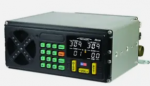

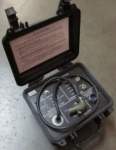
what about the programming software? Is it DOS based?I can get one...FOR FREE!!!!!!!!!!!!!
Interesting yes, so when was the AAR standard channel plan invented? and railroad radios came pre-programmed with the standard AAR channels to selection?
Check out that report. The AAR plan (or "Railroad Radio Service") changed over time as technology improved. The original plan established around the end of WWII was 60 channels from 158.430 to 161.970 mc (each frequency was spaced 60 kc apart back then). It seems to me in the early 1960s when 30 kc spacing became narrowband the FCC contracted the bandwidth allotted for the railroad (but actually gave them more frequencies due to the "new" narrow spacing). I know I found the changes in an old issue of Railroad Signaling & Communications magazine that's available on Google Books, but can't recall the exact date. For instance, the pre-merger Erie used two frequencies: 159.05 and 160.05, but the post-merger Erie Lackawanna used 161.400 mainly (although more frequencies were used in yards, for MOW, PBX, etc.), so I'm guessing the EL was awarded a new frequency when it was decided the former Erie channels wouldn't be grandfathered in. Other early adopters of radio were Rio Grande (160.920) and Missouri Pacific (160.410).
At the time of that article in 1977 it says there were 91 frequencies at 15 khz separation between 160.215 and 161.565 MHz, and it seems that plan was adopted in the early 70s although the "new" 15 khz channels are referred to as "tertiary", and it didn't seem they were in wide use yet.
If anyone has either one of the AAR railroad radio surveys put out in 1973 or '74 I'd love to see them. There are still some "fallen flag" railroads that I know used radio a lot, but I have clue what frequencies they used.
When I first got into railfanning and scanners most railroads had a singular Road channel and a normal Yard channel. With the mergers of the 1970's and 80's extra road channels were getting more common and the 4-channel radios weren't cutting it.
In the Midwest the common Road channels that I had crystals for were:
160.890 CNW
160.770 MILW
161.085 SOO (recently changed from 161.370 which was still used to the north)
160.560 ATSF
161.100 BN
161.190 IC
160.800 CR
160.230 B&O
160.590 GTW
160.470 MP
160.740 UP
161.610 RI
160.440 NW
Of these we thought the new Soo Line channel was weird as it was the only one with the 15 KHz. spacing that we commonly listened to at the time. Also, the C&NW was the first one we were aware of that had multiple channels that were in common use. 161.040 was Channel 3 and a new Road channel since they had 3 busy commuter lines all converging so they had to break things up. Channel 2 was 160.455 and was used for yard and MOW and 161.175 was a new yard channel that popped up from time to time as Channel 4.
In the Midwest the common Road channels that I had crystals for were:
160.890 CNW
160.770 MILW
161.085 SOO (recently changed from 161.370 which was still used to the north)
160.560 ATSF
161.100 BN
161.190 IC
160.800 CR
160.230 B&O
160.590 GTW
160.470 MP
160.740 UP
161.610 RI
160.440 NW
Of these we thought the new Soo Line channel was weird as it was the only one with the 15 KHz. spacing that we commonly listened to at the time. Also, the C&NW was the first one we were aware of that had multiple channels that were in common use. 161.040 was Channel 3 and a new Road channel since they had 3 busy commuter lines all converging so they had to break things up. Channel 2 was 160.455 and was used for yard and MOW and 161.175 was a new yard channel that popped up from time to time as Channel 4.

When I hired on with Conrail in November 1976, I thought they only used two channels. Channel 1 Road was AAR 46 (160.800 MHz) and Channel 2 Yard was AAR 64 (161.070 MHz). You could sit in the Logansport yard office and hear the dispatchers out of Fort Wayne on the Road channel talking to trains on the Michigan Branch around Marion. We really didn't think radio congestion was any big deal.
When I moved to Indianapolis in May 1977, I learned that Avon Yard was on Channel 4, AAR 58 (160.980 MHz), though Hawthorne, Transfer, and Hill Yards used Channel 2. Since most crews still used hand signals when switching, there wasn't much radio traffic. But, I always wondered about Channel 3 which was AAR 50 (160.860 MHz). Sometimes, yard crews would use it if they wanted to work without interruption from other crews. But, that was it for Conrail in central Indiana--just four radio channels.
Things are a lot different today. A 4-channel scanner just isn't enough anymore.
When I moved to Indianapolis in May 1977, I learned that Avon Yard was on Channel 4, AAR 58 (160.980 MHz), though Hawthorne, Transfer, and Hill Yards used Channel 2. Since most crews still used hand signals when switching, there wasn't much radio traffic. But, I always wondered about Channel 3 which was AAR 50 (160.860 MHz). Sometimes, yard crews would use it if they wanted to work without interruption from other crews. But, that was it for Conrail in central Indiana--just four radio channels.
Things are a lot different today. A 4-channel scanner just isn't enough anymore.
Interesting yes, so when was the AAR standard channel plan invented? and railroad radios came pre-programmed with the standard AAR channels to selection?
That was part of the reason for the development of the Clean Cab Radio; a common tray and connectors to make the swapping out of radios relatively easy. Different manufacturers could make a radio to the same specs and it would work on a Conrail, C&NW or Santa Fe engine.
As @cbehr91 noted, the original 91 channels we're used to came about in the late 60s or early 70s. The standard mounting tray and connectors probably date from the late 70s or early 80s; some radios I worked on were Motrac and Mocom-vintage stuff with a huge 4-channel control head with speaker and a telephone handset, which pre-dated the standard mounting tray. Later I had a 4-channel Wabco radio (ex-Conrail) dating from about the early 80s which did use the standard tray and connectors.
The lack of radios with standardized mounting and connections was one of the reasons (maybe the primary reason) that swapping out radios on run-through power was rare, and instead a locomotive from the receiving railroad stuck on the head end (cab signal requirements probably also had a lot to do with it).
The all-channel radios started showing up, to the best of my recollection, sometime in the early 90s.

RadioJonD
Exalted Nabob
- Joined
- Dec 19, 2002
- Messages
- 635
- Reaction score
- 95
Not really radio, but...
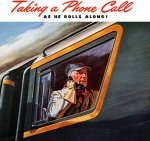
Linked together . . . by Induction Telephone | Pennsylvania Railroad, 1945
Source
Linked together . . . by Induction Telephone | Pennsylvania Railroad, 1945
Source
Sorry for the delay...I've been BUSY!!!!! I can get a radio shop copy, the DOS, unknown. Uh, and it's JEM Corp...my badwhat about the programming software? Is it DOS based?
This is really cool, I'd never even heard of induction telephone before seeing this. Do any ham guys still use something similar today?Not really radio, but...
View attachment 124900
Linked together . . . by Induction Telephone | Pennsylvania Railroad, 1945
Source

cr8054
Member
- Joined
- Mar 10, 2022
- Messages
- 61
- Reaction score
- 27
When I was working for Conrail in North Jersey we had the following frequencies: 160.800 Road 1, 161.070 Road 2, 160.860 channel 3 (yard), 160.980 channel 4 River Line, and 160.245 Oak Island Hump. 161.400 was NJTransit for jobs that went on NJTransit to switch industries, etc.When I hired on with Conrail in November 1976, I thought they only used two channels. Channel 1 Road was AAR 46 (160.800 MHz) and Channel 2 Yard was AAR 64 (161.070 MHz). You could sit in the Logansport yard office and hear the dispatchers out of Fort Wayne on the Road channel talking to trains on the Michigan Branch around Marion. We really didn't think radio congestion was any big deal.
When I moved to Indianapolis in May 1977, I learned that Avon Yard was on Channel 4, AAR 58 (160.980 MHz), though Hawthorne, Transfer, and Hill Yards used Channel 2. Since most crews still used hand signals when switching, there wasn't much radio traffic. But, I always wondered about Channel 3 which was AAR 50 (160.860 MHz). Sometimes, yard crews would use it if they wanted to work without interruption from other crews. But, that was it for Conrail in central Indiana--just four radio channels.
Things are a lot different today. A 4-channel scanner just isn't enough anymore.
- Status
- Not open for further replies.
Similar threads


- Replies
- 2
- Views
- 756

