I'm setting up a long wire antenna, and many sources suggest adding a ground rod. My home already has a ground rod, and so I'm wondering if I need another one dedicated to the radio platform, or can I just run a wire to a nearby outlet box which is presumably already grounded by the house. If another rod is recommended, do I need to go with an 8' copper rod as is code for most structures today (or so I read) or will less length do the job? Just wondering what you folks do for your own setups. Thanks. zz03


You are using an out of date browser. It may not display this or other websites correctly.
You should upgrade or use an alternative browser.
You should upgrade or use an alternative browser.
Ground rod help
- Thread starter Zigzag03
- Start date
- Status
- Not open for further replies.

RFI-EMI-GUY
Member
- Joined
- Dec 22, 2013
- Messages
- 8,560
- Reaction score
- 5,999
You should have a surge protector at the entry point to the house which is grounded via a ground rod. It is best to use the existing ground rod located at your electrical meter so that any lightning does not travel through your interior wiring as would happen by simply grounding to an electrical box/outlet.
If that location is not convenient, you can add a new ground rod for the surge protector, but it must be bonded to the existing one with #6 solid copper wire. For every 16 feet of distance between the ground rods, an additional ground rod bust be placed. For example a surge protector around corner of house 32 or 48 feet away.
Existing ground 8 foot rod> |-------------|*------------- | <New 8 foot ground rod 32 feet away.
Existing ground 8 foot rod> |-------------|*------------- |*------------- | <New 8 foot ground rod 48 feet away.
|* midpoint 8 ft ground rod.
| 8 ft ground rod.
------------- #6 solid copper wire, ~16 feet long.
If that location is not convenient, you can add a new ground rod for the surge protector, but it must be bonded to the existing one with #6 solid copper wire. For every 16 feet of distance between the ground rods, an additional ground rod bust be placed. For example a surge protector around corner of house 32 or 48 feet away.
Existing ground 8 foot rod> |-------------|*------------- | <New 8 foot ground rod 32 feet away.
Existing ground 8 foot rod> |-------------|*------------- |*------------- | <New 8 foot ground rod 48 feet away.
|* midpoint 8 ft ground rod.
| 8 ft ground rod.
------------- #6 solid copper wire, ~16 feet long.
Last edited:
RFI-EMI-GUY
Member
- Joined
- Dec 22, 2013
- Messages
- 8,560
- Reaction score
- 5,999
My first SW setup had a longwire stretched between a tree and the eave of my house. It came into a window sill. When I was not using the radio I would disconnect the wire. Sure enough lightning struck that wire and even though it was not connected to any radio, the surge damaged several electronic devices in the house.

prcguy
Member
- Joined
- Jun 30, 2006
- Messages
- 18,944
- Reaction score
- 15,392
According to the National Electrical Code in the US, if you add another ground rod you must bond it to the main house ground rod at the electrical panel with no less than #6 copper wire. There are length limits and if its a long run you may have to upsize the wire. NEC also requires grounding most antennas and that can be done at a 9:1 type transformer if you have one for the long wire or you can ground the coax shield in various ways.
All the above is for human safety and I have personally never seen a reduction in noise from grounding an antenna but others claim to have seen it. What you definitely don't want to do is add another ground rod without bonding to the main house ground. I did that once about 47yrs ago and it placed about 90 volts AC on the coax to that antenna due to its closer proximity to my neighbors electrical panel than mine. If you decide to add another ground rod and bond it I would not go smaller than an 8ft and would even recommend a 10ft.
All the above is for human safety and I have personally never seen a reduction in noise from grounding an antenna but others claim to have seen it. What you definitely don't want to do is add another ground rod without bonding to the main house ground. I did that once about 47yrs ago and it placed about 90 volts AC on the coax to that antenna due to its closer proximity to my neighbors electrical panel than mine. If you decide to add another ground rod and bond it I would not go smaller than an 8ft and would even recommend a 10ft.
RFI-EMI-GUY
Member
- Joined
- Dec 22, 2013
- Messages
- 8,560
- Reaction score
- 5,999
I will add, NEVER disconnect the existing main utility ground rod, not even for a moment. If you need to attach another wire use a second bronze clamp to the existing rod or to the existing bare wire.
We had a tech here disconnect that ground rod "to measure ground resistance" and it caused $250K in equipment damage. The utility ground rod is there not only for lightning protection, it is for safety and balancing the neutral.
There are proper ways to measure ground resistance and lifting a live utility ground is not one of them.
We had a tech here disconnect that ground rod "to measure ground resistance" and it caused $250K in equipment damage. The utility ground rod is there not only for lightning protection, it is for safety and balancing the neutral.
There are proper ways to measure ground resistance and lifting a live utility ground is not one of them.

n5ims
Member
- Joined
- Jul 25, 2004
- Messages
- 3,993
- Reaction score
- 304
Thank you. Here in Fort Myers lightning is very common hence my concern. The surge protector you are talking about is not the standard strip-type like the unit power would be plugged into, but something different?
What you want is something like this from MFJ --> MFJ MFJ-270 Lightning Protection, MFJ270 (hamradio.com) <-- that is low cost and readily available. You really want one where you can replace the gas discharge tube --> MFJ MFJ-97 Lightning Protection, MFJ97 (hamradio.com) <-- if you can. This will allow you to only replace the lower cost tube instead of the full cost of the device when you have a lightning strike nearby (a direct strike will generally require a full replacement and then some). They make these with various types of coax connectors so you can get the one that fits best to your installation. Many folks swear by the Polyphaser brand, but these are much more expensive and generally are a full replace when you have a nearby strike.
prcguy
Member
- Joined
- Jun 30, 2006
- Messages
- 18,944
- Reaction score
- 15,392
A metallic water pipe that goes into the ground can sometimes be used as a temporary ground for safety while disconnecting the main ground rod for testing or replacement. Not too long ago I tested the ground resistance of my main ground rod and it was up around 14-15 ohms, which is not good. The ground wire from the panel to the rod was also wrong and about #14. I pulled out the old 8ft rod and replaced with a fresh 10ft of larger diameter that took a good new bite in the dirt and ended up with about 4.5 ohms which is great and below the recommend 5 ohm minimum. I also upgraded the ground wire to #6 and replaced the flexi conduit covering the wire. It takes special equipment to measure ground rod resistance.

I will add, NEVER disconnect the existing main utility ground rod, not even for a moment. If you need to attach another wire use a second bronze clamp to the existing rod or to the existing bare wire.
We had a tech here disconnect that ground rod "to measure ground resistance" and it caused $250K in equipment damage. The utility ground rod is there not only for lightning protection, it is for safety and balancing the neutral.
There are proper ways to measure ground resistance and lifting a live utility ground is not one of them.
RFI-EMI-GUY
Member
- Joined
- Dec 22, 2013
- Messages
- 8,560
- Reaction score
- 5,999
Thank you. Here in Fort Myers lightning is very common hence my concern. The surge protector you are talking about is not the standard strip-type like the unit power would be plugged into, but something different?
There are a lot of flavors of "Lightning Arrestor" to choose from
Ham Radio Outlet Search Results
Amateur radio and ham radio item search by products, brand, category, and price.
www.hamradio.com
For protection of coaxial cable type feed.
"N" connectors
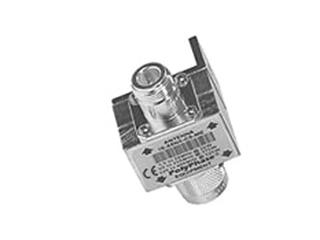
Polyphaser IS-50NX-C0-ME
1.5 - 700 MHz Flange Mount Lightning Arrestor - HF 2000 Watts - N Female to N Male
www.hamradio.com
"UHF Connectors"
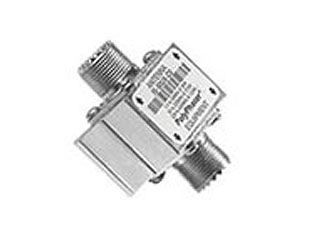
Polyphaser IS-50UX-C0
1.75 - 700 MHz Flange Mount Lightning Arrestor - SO-239 UHF Female Connectors
www.hamradio.com
9:1 Balun for long wire. I don't have any experience with this one , dont find a schematic to see if it has a gas discharge tube and so, can't say for sure how effective it would be in clamping surges on the center conductor of the coax. You might want to add polyphaser type as above to accomplish that.
Ham Radio Outlet Product Details - Item Not found
We were unable to find a product matching that product id and/or description.
www.hamradio.com
RFI-EMI-GUY
Member
- Joined
- Dec 22, 2013
- Messages
- 8,560
- Reaction score
- 5,999
Yeah, I did not trust my main rod at this 1986 house and simply drove another and bridged the two. I have one side and part of the rear with #6 bonded around the corner with intermediary rods.
Coincidentally, today I bought another ground rod and am installing it at my garage to protect my RainBird irrigation timer which blew up on April 15th.
Lightning struck a tree and metal fence post near my "grounded" side of the house, traveled into the irrigation PVC pipes and 8 control wires and caused damage 60 feet away to the timer in the far side of house, garage , blew apart the timer box, and put a surge into the branch service for the garage and caused some other damage.
The next surge like this will pass through the protector I am building which has MOV's , fuses and finally spark gaps to ground. Nobody makes one of these off the shelf. Thankfully I have a well equipped surplus house in town for heavy duty phenolic, AGC fuse blocks and DigiKey for the rest.
Coincidentally, today I bought another ground rod and am installing it at my garage to protect my RainBird irrigation timer which blew up on April 15th.
Lightning struck a tree and metal fence post near my "grounded" side of the house, traveled into the irrigation PVC pipes and 8 control wires and caused damage 60 feet away to the timer in the far side of house, garage , blew apart the timer box, and put a surge into the branch service for the garage and caused some other damage.
The next surge like this will pass through the protector I am building which has MOV's , fuses and finally spark gaps to ground. Nobody makes one of these off the shelf. Thankfully I have a well equipped surplus house in town for heavy duty phenolic, AGC fuse blocks and DigiKey for the rest.

- Joined
- Jun 13, 2018
- Messages
- 869
- Reaction score
- 1,832
Lightning issues and grounding schemes can get quite involved, as you are no doubt learning Zig 
I'll add another resource to your mix:
This 50-some page booklet has been my Go-To guide for everything ground related. Its a publication by the IEEE, a respected authority on such things (I am a card-carrying emeritus.)
A word of caution- there are any number of suggestions on this subject- do your research and proceed scientifically.
Whats a good saying ?
emptor caveat
______________________________________________________________________________
I followed these basic IEEE tenets professionally thru out my career-- but one thing-- voice of experience, I will say about lightning- its it's own master-- if Zesus-y decides you are on his play list.......
Lauri

.
I'll add another resource to your mix:
This 50-some page booklet has been my Go-To guide for everything ground related. Its a publication by the IEEE, a respected authority on such things (I am a card-carrying emeritus.)
A word of caution- there are any number of suggestions on this subject- do your research and proceed scientifically.
Whats a good saying ?
emptor caveat
______________________________________________________________________________
I followed these basic IEEE tenets professionally thru out my career-- but one thing-- voice of experience, I will say about lightning- its it's own master-- if Zesus-y decides you are on his play list.......
Lauri
.
Last edited:
Thanks everyone, now I'm afraid to plug ANYTHING in!! @Lauri-CoyoteFrostbite That little booklet is a gem, and map on page 3 shows south fl to be lightning capitol of the country, which by my experience of the last 20 years is borne out anecdotally. It certainly makes me wonder about all the wires coming into this house and what level of protection they're likely to have. So I'm going to start pounding ground rods, since the "radio shack" will be at the opposite end of the house from the electrical service, add a surpressor, and still disconnect the antenna from the radio when not in use. I think it's the best I can do. Thanks again everyone.

prcguy
Member
- Joined
- Jun 30, 2006
- Messages
- 18,944
- Reaction score
- 15,392
It would involve relocating the laundry room, so I'm thinking I'll just drive some rods!!Moving the radios might be easier.
Lol well I don't know about that! No offense to any Missourins, but Florida, for all its faults, still sounds more appealing. There are 4 whole months without storms!!Yea, like move them to Missouri.

spanky15805
Newbie
- Joined
- Sep 18, 2004
- Messages
- 348
- Reaction score
- 179
from Lauri's link. Had to re-read it a couple of times to get the two brain cells in sync.
"In residential environments, the ground resistance of a driven
ground rod is rarely measured. Even in a favorable situation, if the rod ground
resistance were only 25 Ω, a lightning surge of 10,000 A would produce a
potential rise of 250,000 V at the ground rod"
IEEE
"In residential environments, the ground resistance of a driven
ground rod is rarely measured. Even in a favorable situation, if the rod ground
resistance were only 25 Ω, a lightning surge of 10,000 A would produce a
potential rise of 250,000 V at the ground rod"
IEEE
RFI-EMI-GUY
Member
- Joined
- Dec 22, 2013
- Messages
- 8,560
- Reaction score
- 5,999
I might pour some flasks of mercury around my ground rods. Good Idea?from Lauri's link. Had to re-read it a couple of times to get the two brain cells in sync.
"In residential environments, the ground resistance of a driven
ground rod is rarely measured. Even in a favorable situation, if the rod ground
resistance were only 25 Ω, a lightning surge of 10,000 A would produce a
potential rise of 250,000 V at the ground rod"
IEEE
RFI-EMI-GUY
Member
- Joined
- Dec 22, 2013
- Messages
- 8,560
- Reaction score
- 5,999

Interestingly, this timer has no protective ground inside despite a 3 wire cord. The ground stops at the transformer case and goes no further. The lightning did find its way to "ground" through my branch circuit to the garage. There are MOV's and some fusible foil. The MOV's seem unscathed, the explosion was the fusible foil on the boards going up in "exploding wire" sort of fashion. The knob, front silkscreen , inner door for the wiring and the outer door blew about 10 feet into the garage. Luckily nothing incendiary or there would have been fire.

The lightning struck the orange protective cap on this piece of fence post I had recently stuck by the camphor tree. I was seated 10 feet away inside a window. The surge entered my irrigation system just beyond the tree.
- Status
- Not open for further replies.
Similar threads


- Replies
- 2
- Views
- 853


- Replies
- 5
- Views
- 1K


- Locked
- Replies
- 16
- Views
- 1K
