Multiple antennas using one coax feed

Status
Not open for further replies.

galligan122

Member
Premium Subscriber
Joined
Mar 16, 2024
Messages
117
Reaction score
25
Location
Wabash IN
Hey guys, I currently have a DPD productions 800 MHZ antenna going to a SDS 200 scanner that I do nearly all my scanning on. I scan mostly 800 MHZ P25, some 450-470 MHZ analog, NXDN and DMR, as well as some150-160 MHZ analog. I also have a 996P2 scanner, a Pro-106 and a couple of older uniden analog scanners. Im aware of the limitations of each scanner.

I plan to get two more antennas, one for the 450-470 range and one for the 150-160 range and eventually running 3 scanners, one for each range with the designated antenna feeding the signal. I am seeking advice on running all new coax from each antenna to a scanner, or using a tri-plexer (sorry if it’s not the right term) to save money on cable cost vs the signal loss id get. Thank your for your input.
 

RaleighGuy

Member
Premium Subscriber
Joined
Jul 15, 2014
Messages
17,788
Reaction score
28,338
Location
Raleigh, NC
Hey guys, I currently have a DPD productions 800 MHZ antenna going to a SDS 200 scanner that I do nearly all my scanning on. I scan mostly 800 MHZ P25, some 450-470 MHZ analog, NXDN and DMR, as well as some150-160 MHZ analog. I also have a 996P2 scanner, a Pro-106 and a couple of older uniden analog scanners. Im aware of the limitations of each scanner.

I plan to get two more antennas, one for the 450-470 range and one for the 150-160 range and eventually running 3 scanners, one for each range with the designated antenna feeding the signal. I am seeking advice on running all new coax from each antenna to a scanner, or using a tri-plexer (sorry if it’s not the right term) to save money on cable cost vs the signal loss id get. Thank your for your input.
You are aware there is an Antenna and Associated Hardware thread where our resident antenna experts just wait for questions like this, posting here just cheats them out of the chance to respond to you.


Whiskey3JMC

Surfer of the Delaware Valley Airwaves
Premium Subscriber
Joined
Jul 16, 2006
Messages
10,762
Reaction score
9,483
Location
Simulcastylvania, TE
Adding to above, you'd be best advised to click the Report link at the bottom of your posting and ask for this thread to be moved to the forum @RaleighGuy mentioned. Cross posting is frowned upon here
 

mmckenna

I ♥ Ø
Joined
Jul 27, 2005
Messages
28,722
Reaction score
37,233
Location
United States
Hey guys, I currently have a DPD productions 800 MHZ antenna going to a SDS 200 scanner that I do nearly all my scanning on. I scan mostly 800 MHZ P25, some 450-470 MHZ analog, NXDN and DMR, as well as some150-160 MHZ analog. I also have a 996P2 scanner, a Pro-106 and a couple of older uniden analog scanners. Im aware of the limitations of each scanner.

I plan to get two more antennas, one for the 450-470 range and one for the 150-160 range and eventually running 3 scanners, one for each range with the designated antenna feeding the signal. I am seeking advice on running all new coax from each antenna to a scanner, or using a tri-plexer (sorry if it’s not the right term) to save money on cable cost vs the signal loss id get. Thank your for your input.


Ideal solution is to run dedicated coaxial cable from each antenna to the dedicated radio.
Use the correct type of cable for the length, your budget and how much loss you are willing to tolerate. Add in the costs of 6 connectors, 3 lightning protection device, plus supplies for grounding and waterproofing the connectors.

Or, you a pair of triplexers, or a triplexer and an amplified distribution amp. That will let you run a short coax from each antenna to the triplexer on the mast and one feedline down to where your radios are.
Then you can either split them out again using another triplexer, or just distribute the composite signal to all 3 radios so you can do whatever you want.
Benefit of that is it'll save you some coaxial cable and a lightning protection device.
Drawback is that you'll need to make sure the triplexer is designed to be mounted outside,. You'll need to waterproof all those connections, and you'll have to add the cost of another triplexer inside or a distribution amp.
 

galligan122

Member
Premium Subscriber
Joined
Mar 16, 2024
Messages
117
Reaction score
25
Location
Wabash IN
Thank you for the reply! Next question, I am aware the better cable I use the less cable loss I will get. I’m also aware the longer the run the more loss. If I were to do a 75-100 foot run, on a 150-160 MHz antenna, what’s the lowest grade cable I’d be in good shape with? I used LMR400 with my 800 MHZ run but assume that would be over kill for 150-160 MHZ, and if I can spend less and be okay, I’d like to. Thanks!
 

Ubbe

Member
Joined
Sep 8, 2006
Messages
11,116
Reaction score
4,786
Location
Stockholm, Sweden
I am seeking advice on running all new coax from each antenna to a scanner, or using a tri-plexer (sorry if it’s not the right term) to save money on cable cost vs the signal loss id get. Thank your for your input.
It will probably depend on the coax length and if you anticipate that some signals that you are going to monitor will be close to squelch level and very weak.

LMR400 coax are expensive as well as triplexers are. Running RG6 from each antenna are cheap and not much difference in attenuation compared to LMR400, and less of a concern if you don't do weak signal monitoring.

/Ubbe
 

galligan122

Member
Premium Subscriber
Joined
Mar 16, 2024
Messages
117
Reaction score
25
Location
Wabash IN
It will probably depend on the coax length and if you anticipate that some signals that you are going to monitor will be close to squelch level and very weak.

LMR400 coax are expensive as well as triplexers are. Running RG6 from each antenna are cheap and not much difference in attenuation compared to LMR400, and less of a concern if you don't do weak signal monitoring.

/Ubbe
Thank you! The run will be 75-100 feet depending where exactly I am able to put this next the antenna. I already have a 800 MHZ antenna I used LMR400 with as I do scan distant sites one those frequencies. The 150-160 MHZ would be mostly within 20 miles of me at the most, but the stock antenna struggles to bring some of them in. The 800 MHZ brings them in a little better but i am sure an antenna made for the band will do best. As money allows I’ll move onto the 450-470 antenna also, but I’m getting them knocked out and setup one a time.
 

mmckenna

I ♥ Ø
Joined
Jul 27, 2005
Messages
28,722
Reaction score
37,233
Location
United States
The "which cable" question gets asked a lot, and it's difficult to answer.

For most, budgets are a real thing. There will always be a better cable, and you can chase fractions of a Decibel all day long. When it comes down to it, the cost is usually the limiting factor.
Also consider how difficult/easy it is to route. As I'm sure you discovered, LMR-400 is kind of stiff and it's got a limitation on bend radius. As you increase the cable size, that gets to be more of an issue when routing in a residential building.

Link budget is the other. How much signal is available at your antenna location, and will the losses in cable, connectors, etc. drop that signal low enough that your radio won't hear it clearly. That takes some measurements with tools you don't likely have, and some maths to sort out.

The RG-6 that Ubbe mentioned is a good compromise. It's inexpensive, it's easy to install connectors on, it's easy to route. You can get it at Home Depot, along with the stripper, compression tool, and your choice of F or BNC connectors. When it comes down to it, being able to install your own connectors and only use the amount of cable you need has some real value. Trying to order custom cables with large connectors and end up coiling up unused length has it's drawbacks.

You can play around with the online coaxial cable loss calculators and get an idea of how much loss the different cables will have over a given length on a given frequency. Take the output from that and compare it to your budget and you'll likely be able to answer your own question:

LMR-400 is going to have about half the loss of cheap RG-6, but you can overcome some/all of those losses by increasing antenna gain.

In other words, save money on expensive coaxial cable by using higher gain antennas. More antenna gain means more RF getting sent down the coax and a stronger signal will reach your radio's antenna jack.
 

galligan122

Member
Premium Subscriber
Joined
Mar 16, 2024
Messages
117
Reaction score
25
Location
Wabash IN
The "which cable" question gets asked a lot, and it's difficult to answer.

For most, budgets are a real thing. There will always be a better cable, and you can chase fractions of a Decibel all day long. When it comes down to it, the cost is usually the limiting factor.
Also consider how difficult/easy it is to route. As I'm sure you discovered, LMR-400 is kind of stiff and it's got a limitation on bend radius. As you increase the cable size, that gets to be more of an issue when routing in a residential building.

Link budget is the other. How much signal is available at your antenna location, and will the losses in cable, connectors, etc. drop that signal low enough that your radio won't hear it clearly. That takes some measurements with tools you don't likely have, and some maths to sort out.

The RG-6 that Ubbe mentioned is a good compromise. It's inexpensive, it's easy to install connectors on, it's easy to route. You can get it at Home Depot, along with the stripper, compression tool, and your choice of F or BNC connectors. When it comes down to it, being able to install your own connectors and only use the amount of cable you need has some real value. Trying to order custom cables with large connectors and end up coiling up unused length has it's drawbacks.

You can play around with the online coaxial cable loss calculators and get an idea of how much loss the different cables will have over a given length on a given frequency. Take the output from that and compare it to your budget and you'll likely be able to answer your own question:

LMR-400 is going to have about half the loss of cheap RG-6, but you can overcome some/all of those losses by increasing antenna gain.

In other words, save money on expensive coaxial cable by using higher gain antennas. More antenna gain means more RF getting sent down the coax and a stronger signal will reach your radio's antenna jack.
Thank you for your insight and knowledge! It’s much appreciated
 

Brales60

Active Member
Premium Subscriber
Joined
Jun 19, 2022
Messages
575
Reaction score
384
Location
Punta Gorda, Fl
Why not just run one antenna for all the scanners. I only have 2, but I run a Omni X into a multiplexer and have no issues with 700-800's and down to low 100's-160's. I know that @buddrousa has a single antenna with a boatload of scanners.
 

mmckenna

I ♥ Ø
Joined
Jul 27, 2005
Messages
28,722
Reaction score
37,233
Location
United States
Band specific antennas will work better in most cases. It also offers more flexibility for choosing the right type, gain, directionality, etc.

Same reason we use separate antennas for all our systems at work. Antenna choice tailored to the specific needs.
 

G6FGO

Chief of Grammar Police.
Joined
Dec 6, 2024
Messages
72
Reaction score
90
Location
Gloucester, England
75Ω coax is fine for receiving use.
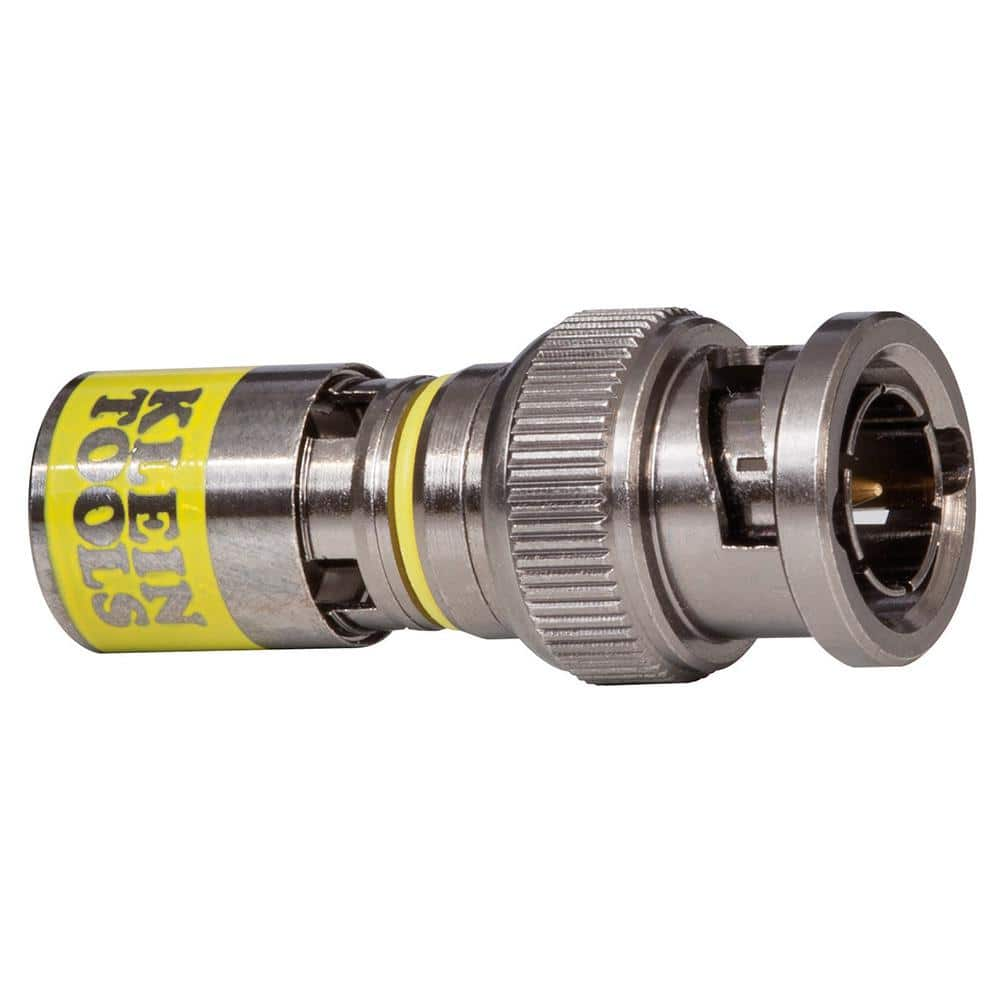
You can get compression type BNC connectors that will fit RG-6 at Home Depot:

The centre pin of a 75r BNC is smaller in diameter that a 50r. Although it will not therefore damage a 50r socket, it is likely to cause an intermittent connection.

Just use RG58 / UR76 or RG8x and be done with it. I have never understood this idea of using TV coax for comm's when the correct cable is so easy to find.
 

prcguy

Member
Joined
Jun 30, 2006
Messages
18,912
Reaction score
15,330
Location
So Cal - Richardson, TX - Tewksbury, MA
The centre pin of a 75r BNC is smaller in diameter that a 50r. Although it will not therefore damage a 50r socket, it is likely to cause an intermittent connection.

Just use RG58 / UR76 or RG8x and be done with it. I have never understood this idea of using TV coax for comm's when the correct cable is so easy to find.
Center pin of a 50 ohm and 75 ohm BNC connector are identical diameter and 100% compatible. The difference in impedance is handled by no dielectric in a 75 ohm BNC which raises its impedance. A 75 ohm N connector has a smaller diameter pin and inserting a 50 ohm N male into a 75 ohm female will break the 75 ohm female fingers.
 

G6FGO

Chief of Grammar Police.
Joined
Dec 6, 2024
Messages
72
Reaction score
90
Location
Gloucester, England
Center pin of a 50 ohm and 75 ohm BNC connector are identical diameter and 100% compatible. The difference in impedance is handled by no dielectric in a 75 ohm BNC which raises its impedance. A 75 ohm N connector has a smaller diameter pin and inserting a 50 ohm N male into a 75 ohm female will break the 75 ohm female fingers.

Then we will have to agree to disagree. In my professional life I used 75r BNC connectors extensively and in my comm's experience, 50r too. 75r BNC just like N type have thinner diameter pins.
 

mmckenna

I ♥ Ø
Joined
Jul 27, 2005
Messages
28,722
Reaction score
37,233
Location
United States
Then we will have to agree to disagree. In my professional life I used 75r BNC connectors extensively and in my comm's experience, 50r too. 75r BNC just like N type have thinner diameter pins.

The old standards did have slightly different sized pins, but that was changed back in 2007, I think and they are now compatible. If you are using modern connectors, like a hobbyist would purchase new, this isn't an issue:
 
Status
Not open for further replies.
Top