SDR Antenna & Recption

saioke

Member
Joined
Apr 18, 2010
Messages
254
Reaction score
123
1/4 wave antennas are 0dB gain.
But the benefit is that they are quite broad banded.
So they're really not too different than a discone? Afaik Discones are also 0dB but, the waves go more towards the sky which is why they seem better for picking up airband. Guessing the 1/4 wave doesn't have that issue, so does the 1/4 have any other advantages/disadvantages compared to a discone? Just curious.
 

mmckenna

I ♥ Ø
Joined
Jul 27, 2005
Messages
28,048
Reaction score
35,136
Location
United States
So they're really not too different than a discone? Afaik Discones are also 0dB but, the waves go more towards the sky which is why they seem better for picking up airband. Guessing the 1/4 wave doesn't have that issue, so does the 1/4 have any other advantages/disadvantages compared to a discone? Just curious.

Right, it's about the radiation pattern.
 

rgchristy

Member
Premium Subscriber
Joined
Mar 10, 2005
Messages
1,273
Reaction score
766
Location
Delco, PA
Here's a similar antenna plan

The NA4IT 'CHEAP' Dual Band Ground Plane


Interesting:


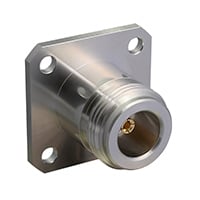
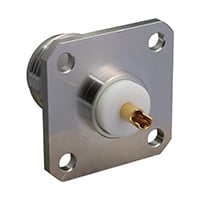
I do have one question. Is there a reason why people use SO239 & PL259 bulkhead connectors for usage above 300 MHz and not N bulkhead connectors?

MFG_CONN003-W_ViewA_sml.jpg
MFG_CONN003-W_ViewB_sml.jpg
 

dickie757

Wired
Joined
Apr 25, 2017
Messages
639
Reaction score
300
Location
Out of range
Is there a reason why people use SO239 & PL259 bulkhead connectors for usage above 300 MHz and not N bulkhead connectors?
Their intended use is not of a critical nature, so if it works, it works. If not, throw more watts at it.

UHF is easy to work, manipulate, plentiful, cheap, and known. N is exotic, expensive, hard to work, unobtainium in the field. For the typical ham, UHF is good enough. For the decerning radio enthusiast, N might be part of their feed system. For pro and commercial, N all the way, no adapters besides flexible jumpers.

Edit....below 150 watts. After that, your getting into DIN and 4.3 type connectors. Imagine (10) 100watt transmitters feeding into one antenna. Lottsa juice to condent with.
 
Last edited:

mmckenna

I ♥ Ø
Joined
Jul 27, 2005
Messages
28,048
Reaction score
35,136
Location
United States
I do have one question. Is there a reason why people use SO239 & PL259 bulkhead connectors for usage above 300 MHz and not N bulkhead connectors?

Hams seem to really love the UHF connector. As Dicky said, they are cheap, easy to install and fall squarely into the "good enough" category. Unfortunately, they often get used in the wrong application, especially as a form of mobile antenna mount, which I never understood why. There are certainly better options out there but they are harder to install and cost more.

Kind of rare to find UHF connectors in the commercial world, other than some VHF and UHF mobile radios from a few manufacturers. Kenwood and Icom still use them on LMR mobiles on UHF and below. Kenwood uses N for their 700/800/900MHz radios. Rare to see them used in any fixed infrastructure, but there's still old duplexers that use them for VHF/UHF use.

The UHF will be fine for what you are doing. Nothing wrong with N connectors and they are preferred for higher frequencies, but it's unlikely you'd notice a difference in a scanner application like this.

Only advice I'll add is to make sure you properly seal all the outdoor coaxial connectors very well. Water intrusion, be it rain or condensation, will wreck things in short order.
 
Top