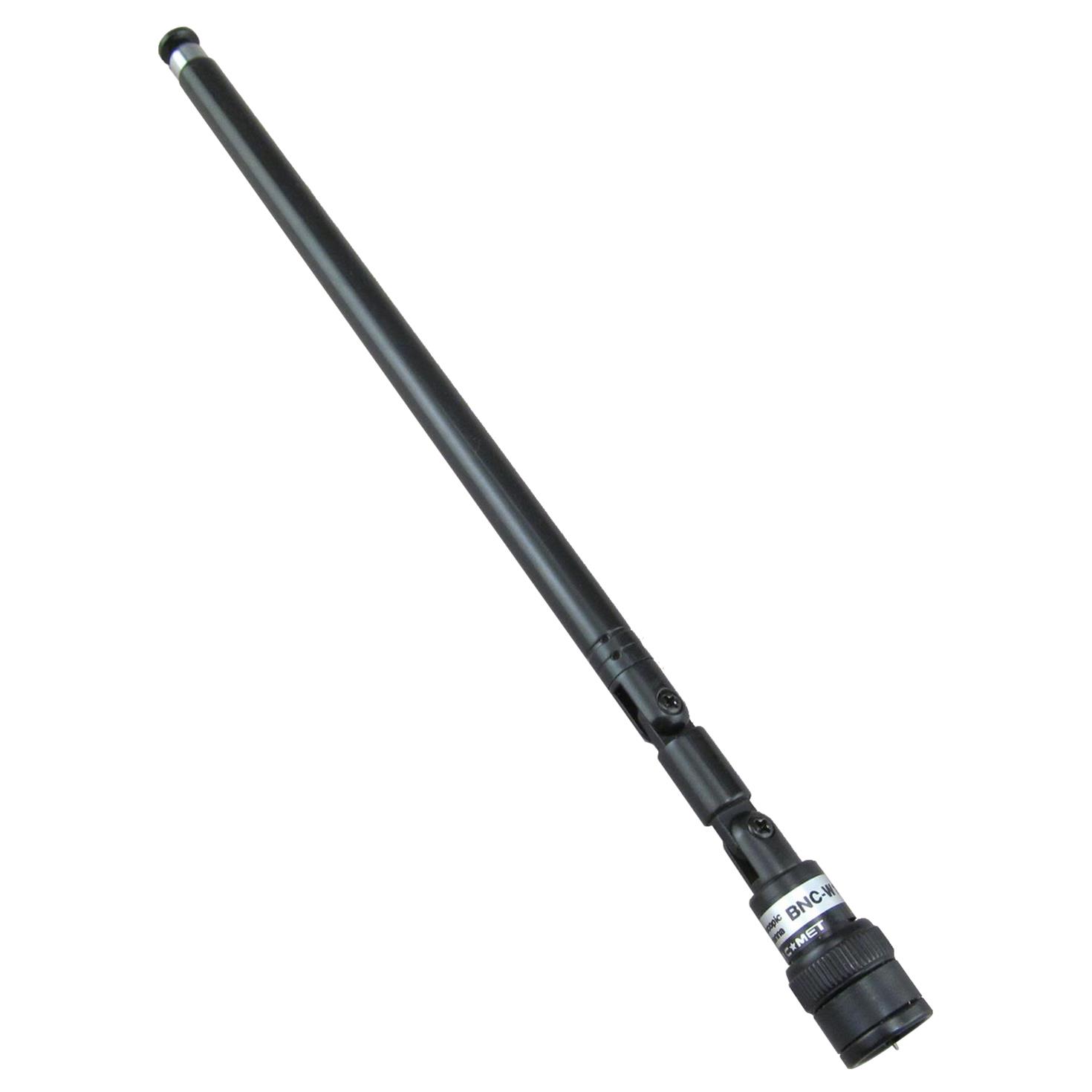
Portable antennas has something like a 10% bandwidth built into them, if not a gain antenna that then could be more narrow. Unidens antennas are usually tuned to 450MHz and then receive well from 430MHz up to 470MHz. If the systems you are most interested in are in the 420MHz band then another antenna tuned to 420MHz, that then covers 400-440MHz, would perform better but any weak 470MHz systems are completely lost. So antenna choice will depend on your location and what frequencies you would want to improve the most and what local very strong systems that can be received using even a wet noodle.
The whole Mil-Air range of 225MHz to 400MHz are impossible to receive with any good signal strength from a portable antenna as it is a too wide frequency range. You can make an antenna that works worse and flatten out its gain to perform equally bad in its whole frequency range that on the edges of the frequency range will perform a little better than the optimally tuned antenna.
A discone type of antenna are a wide band antenna that can receive a wide frequency range of perhaps 1:5 ratio, 100-500MHz. There is a logperiodic antenna type that has a huge frequency range, that has multiple dipoles at different length for different frequencies that automatically use 2-3 dipoles and direction elements for each frequency, but the antenna are huge and not portable. The same with a Yagi antenna type that can be tuned to cover a wide frequency range.
Probably a telescopic antenna would work the best, to listen to a frequency and tune the antenna length for best reception and hope that all other frequencies will also be received. The bigger the antenna the more of the energy in the air will be picked up so a bigger antenna are prefered. A quarter wave at 300MHz are 25cm or 10 inches but you have a bad groundplane using a portable radio so maybe a 3/4 antenna length will work better, 75cm or 30 inches. A telescope antenna have the advantage of being easy to change it's length and try what works the best.
/Ubbe