

There have been some really weird scanners made over the years, I have written about some of them. Here are a couple more that I recall seeing here and there.
GE Searcher
This thing (well two things actually) was a neat idea but flawed in execution. There was a handheld version as well as a desktop/luggable one. Both used the same method of “programming”. Each of the four channels had individual tuning knobs so one could tune it to whatever frequency they wanted as long as it was on the VHF high-band. The smaller one used a set of 6 AA cells, the big guy used 6 D-Cells or AC house current. The big’un also had an AM/FM radio so it could provide tunes or the local news.
I remember seeing these at the local Radio Shack back in the mid and late 1970’s. I don’t think they were a catalog item however, but some stores sold stuff that wasn’t in the catalog. They were also sold in other stores, I think they had them at places like Montgomery Wards and Service Merchandise.
The handheld version was bulky, even by 1970’s standards. Tuning it was pretty difficult, you had to wait until the station you wanted to hear was transmitting and hope you found it before they finished talking. While that was the norm for any tunable receiver then, it was more difficult as the knobs and range of motion was very limited on this radio. Once you did find the right station the radio was pretty stable.
The bigger radio, like many other portable radios of the time, was designed to be used at home or outside. You could plug it in to a wall outlet or run off the D-Cell batteries. Battery life was pretty poor but the AM/FM audio was darned good. The scanner was the same as the handheld one but it had an meter that doubled as a relative frequency display and battery level. One would think it would have also been used for signal strength but one would be wrong.
I played with one or two of these back then in the stores and I had a friend who had one. They were too expensive and limited to high-band only (so no State Police or UHF police channels in my area).
Bearcat BC-E 8-track scanner
This was actually a pretty effective little device from the early 1980’s. It was a VHF high and low band 4-channel scanner that was built into an 8-track cartridge and was plugged into your 8-track player. It had a door on the bottom for crystals and the audio came out the stereo speakers. Power came from the 8-track player, I assume they had some sort of power provided to the tape head or something.
My Dad had one of these in his Buick. He was heavily into 8-tracks and stayed with them even long after the rest of the world switched to Cassettes and later CD’s. He already had a CB in the car (at the time everyone did) and did not want another antenna on the car. He got one of these at Wards and I got some crystals for the local channels for him. The darned thing worked great!
The reception was darned good considering there was no outside antenna capability. Somehow it was able to utilize the stereo for the antenna as well as power and audio delivery. It used the same 10.8 MHz. IF crystals as other Bearcat scanners of the era.
We had the local police, fire and Sheriff’s channels in that little radio and it got a lot of use. It disappeared eventually, I never figured out whatever happened to it.
Scanocular
This was quite possibly the weirdest radio I ever saw. I had seen pictures and heard stories about this but never saw one until I set up the Scanner Master Museum. Made by (or rather for) Memorex (the recording tape guys) I suspect the scanner part was supplied by Uniden or one of its suppliers.
This thing was a 100-channel scanner covering the VHF high, UHF and 800 bands as well as FM and TV audio. It was built upon a set of 8x25 binoculars. Intended for the race or airshow fan in particular, the idea was that you could watch the action and listen to the scanner at the same time.
I never really got a chance to use one of these but from what I have seen and heard neither the scanner nor the binoculars were very good. It did not have a speaker; you used earphones only. Probably a good thing as the sound levels would have made a speaker pretty much useless at racetracks and airshows anyway.
Regency MX7000
I have written about this before but it bears repeating here it was so weird. When it was introduced the ads showed a case the same as the then current Regency scanner and RH256 two-way radios with a wedged front panel. I thought this would be great, my first 800 MHz. scanner and I could slot it right in where the M100 was in my car with my UHF and VHF Regency mobiles. When I got it however I discovered that the MX7000 was markedly smaller than the other Regency radios and had no mounting holes. It didn’t even have a mounting bracket for the car.
Eventually I was able to source a compression bracket for it but it too was weird. I did try it out in the car but reverted to my trusty M100 as it had a faster scan rate and fit the aesthetic I had going at the time.
The MX7000 was possible the most sensitive scanner I ever had. It would pick up full-scale stuff on a whip antenna that barely ticked the squelch on another scanner on an outside antenna. It also had full coverage, including the cellular bands and was one of the first radios I used for Military Aviation. It had however very poor selectivity.
The biggest problem was the scan speed. You could measure it with a calendar if you were patient, it was that slow. The other issue was the power connector. While it came with an AC power cable, the connector was this weird 3-pin thing in a triangle layout. I ended up drilling a hole in the back of my radio and putting in a coaxial power plug.
Radio Shack PRO2026
This was the first scanner I ever bought that I truly and deeply hated. This thing was an abomination from the start. Built by Uniden for RadioShack, it took all the good Uniden features out and replaced them with all the bad Radio Shack ones. One of the big difference between Radio Shack scanners and those by Uniden/Bearcat and Regency was that one needed to press the “Program” button on RadioShack scanners to go into programming mode. On other scanners you could just type in the frequency and press Enter.
The PRO2026 was basically a neutered BC760XLT, same case style and shared innards. Instead of the easy programming of the BC760 and it’s kin one had to use the silly Program button on the 2026 in order to program it. They also had to add a couple additional buttons to the 2026 to handle the RadioShack programming methods, this made the action buttons under the display smaller and more difficult to operate.
Perhaps it was my aversion to the operation of the 2026 that clouded my opinion but I could have sworn it was far less sensitive and selective than the 760. I had both and always thought the 760 performed much better.
I never before nor since despised a scanner like I did the Pro2026. Perhaps it was unjustified but abhorrence rarely is.
GE Searcher
This thing (well two things actually) was a neat idea but flawed in execution. There was a handheld version as well as a desktop/luggable one. Both used the same method of “programming”. Each of the four channels had individual tuning knobs so one could tune it to whatever frequency they wanted as long as it was on the VHF high-band. The smaller one used a set of 6 AA cells, the big guy used 6 D-Cells or AC house current. The big’un also had an AM/FM radio so it could provide tunes or the local news.
I remember seeing these at the local Radio Shack back in the mid and late 1970’s. I don’t think they were a catalog item however, but some stores sold stuff that wasn’t in the catalog. They were also sold in other stores, I think they had them at places like Montgomery Wards and Service Merchandise.
The handheld version was bulky, even by 1970’s standards. Tuning it was pretty difficult, you had to wait until the station you wanted to hear was transmitting and hope you found it before they finished talking. While that was the norm for any tunable receiver then, it was more difficult as the knobs and range of motion was very limited on this radio. Once you did find the right station the radio was pretty stable.
The bigger radio, like many other portable radios of the time, was designed to be used at home or outside. You could plug it in to a wall outlet or run off the D-Cell batteries. Battery life was pretty poor but the AM/FM audio was darned good. The scanner was the same as the handheld one but it had an meter that doubled as a relative frequency display and battery level. One would think it would have also been used for signal strength but one would be wrong.
I played with one or two of these back then in the stores and I had a friend who had one. They were too expensive and limited to high-band only (so no State Police or UHF police channels in my area).
Bearcat BC-E 8-track scanner
This was actually a pretty effective little device from the early 1980’s. It was a VHF high and low band 4-channel scanner that was built into an 8-track cartridge and was plugged into your 8-track player. It had a door on the bottom for crystals and the audio came out the stereo speakers. Power came from the 8-track player, I assume they had some sort of power provided to the tape head or something.
My Dad had one of these in his Buick. He was heavily into 8-tracks and stayed with them even long after the rest of the world switched to Cassettes and later CD’s. He already had a CB in the car (at the time everyone did) and did not want another antenna on the car. He got one of these at Wards and I got some crystals for the local channels for him. The darned thing worked great!
The reception was darned good considering there was no outside antenna capability. Somehow it was able to utilize the stereo for the antenna as well as power and audio delivery. It used the same 10.8 MHz. IF crystals as other Bearcat scanners of the era.
We had the local police, fire and Sheriff’s channels in that little radio and it got a lot of use. It disappeared eventually, I never figured out whatever happened to it.
Scanocular
This was quite possibly the weirdest radio I ever saw. I had seen pictures and heard stories about this but never saw one until I set up the Scanner Master Museum. Made by (or rather for) Memorex (the recording tape guys) I suspect the scanner part was supplied by Uniden or one of its suppliers.
This thing was a 100-channel scanner covering the VHF high, UHF and 800 bands as well as FM and TV audio. It was built upon a set of 8x25 binoculars. Intended for the race or airshow fan in particular, the idea was that you could watch the action and listen to the scanner at the same time.
I never really got a chance to use one of these but from what I have seen and heard neither the scanner nor the binoculars were very good. It did not have a speaker; you used earphones only. Probably a good thing as the sound levels would have made a speaker pretty much useless at racetracks and airshows anyway.
Regency MX7000
I have written about this before but it bears repeating here it was so weird. When it was introduced the ads showed a case the same as the then current Regency scanner and RH256 two-way radios with a wedged front panel. I thought this would be great, my first 800 MHz. scanner and I could slot it right in where the M100 was in my car with my UHF and VHF Regency mobiles. When I got it however I discovered that the MX7000 was markedly smaller than the other Regency radios and had no mounting holes. It didn’t even have a mounting bracket for the car.
Eventually I was able to source a compression bracket for it but it too was weird. I did try it out in the car but reverted to my trusty M100 as it had a faster scan rate and fit the aesthetic I had going at the time.
The MX7000 was possible the most sensitive scanner I ever had. It would pick up full-scale stuff on a whip antenna that barely ticked the squelch on another scanner on an outside antenna. It also had full coverage, including the cellular bands and was one of the first radios I used for Military Aviation. It had however very poor selectivity.
The biggest problem was the scan speed. You could measure it with a calendar if you were patient, it was that slow. The other issue was the power connector. While it came with an AC power cable, the connector was this weird 3-pin thing in a triangle layout. I ended up drilling a hole in the back of my radio and putting in a coaxial power plug.
Radio Shack PRO2026
This was the first scanner I ever bought that I truly and deeply hated. This thing was an abomination from the start. Built by Uniden for RadioShack, it took all the good Uniden features out and replaced them with all the bad Radio Shack ones. One of the big difference between Radio Shack scanners and those by Uniden/Bearcat and Regency was that one needed to press the “Program” button on RadioShack scanners to go into programming mode. On other scanners you could just type in the frequency and press Enter.
The PRO2026 was basically a neutered BC760XLT, same case style and shared innards. Instead of the easy programming of the BC760 and it’s kin one had to use the silly Program button on the 2026 in order to program it. They also had to add a couple additional buttons to the 2026 to handle the RadioShack programming methods, this made the action buttons under the display smaller and more difficult to operate.
Perhaps it was my aversion to the operation of the 2026 that clouded my opinion but I could have sworn it was far less sensitive and selective than the 760. I had both and always thought the 760 performed much better.
I never before nor since despised a scanner like I did the Pro2026. Perhaps it was unjustified but abhorrence rarely is.
Last edited:


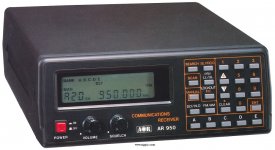

 . Aside from the clumsy RS programming protocol, this radio had a volatile memory--it required a constant 12v source to keep the programmed channels intact.


